

Precision Periodic Unveils First Clean Process Critical Mineral Refinery for Nickel, Cobalt, Manganese
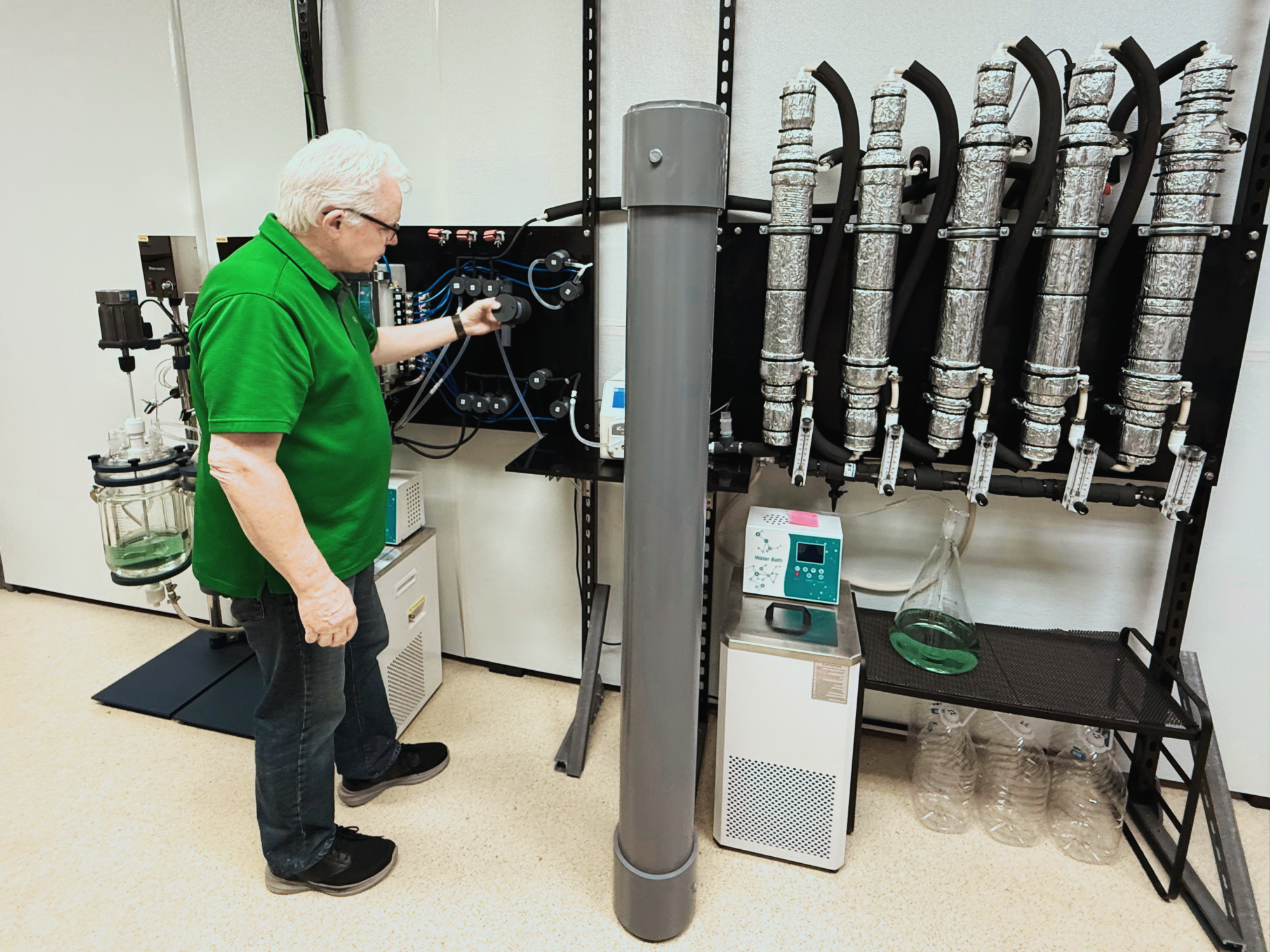
Brian J. Andrew, President, CEO, and co-founder of Precision Periodic, stands beside the company's demonstration Multi-Scale Refining Unit (MSRU) and a full-scale column used for size reference in scaling to commercial production.
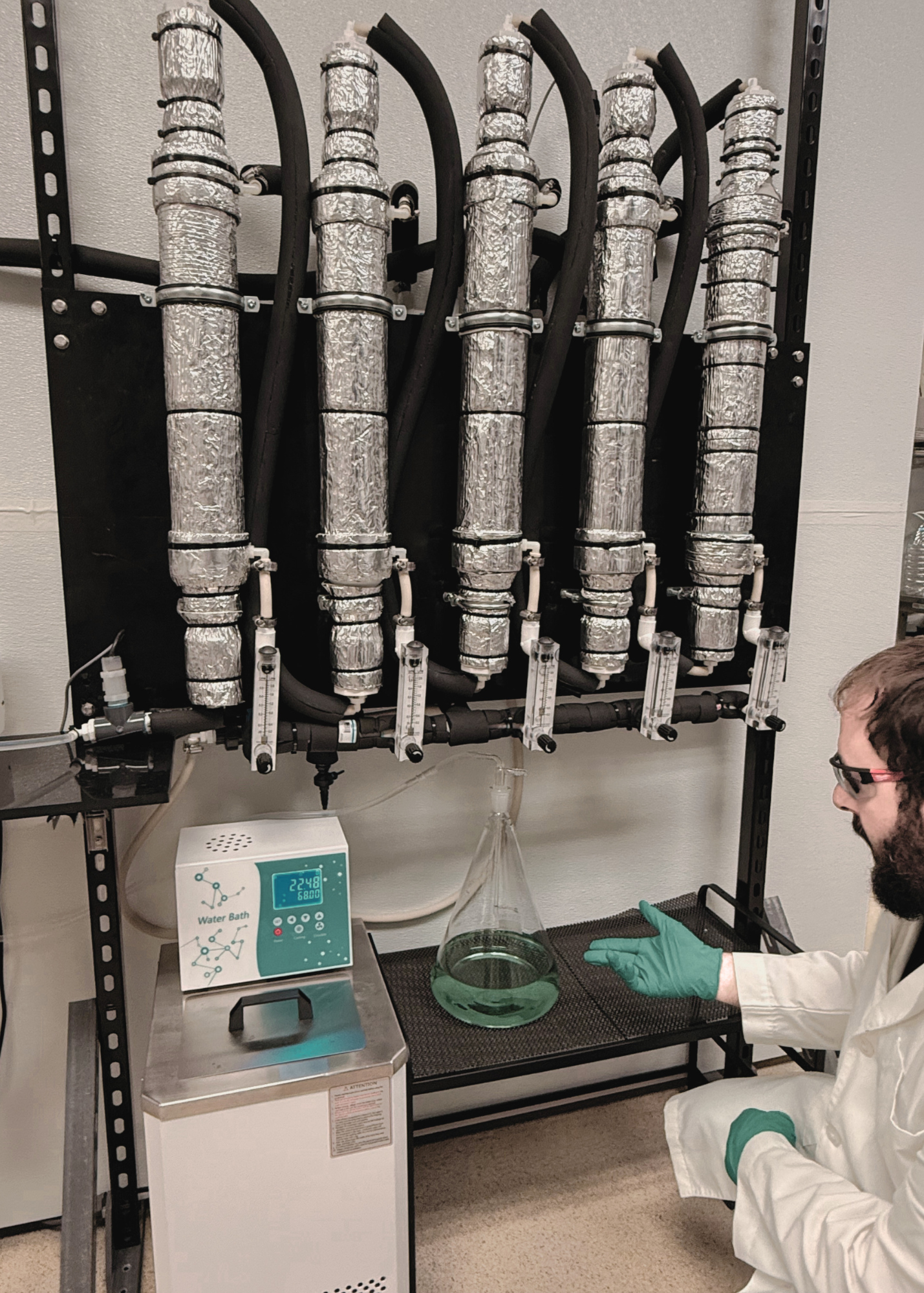
Brandon Carpenter, VP of Nanotechnology and co-founder of Precision Periodic — a Forbes 30 Under 30 honoree in Science and Y Combinator Fellowship alumnus — monitors output from the company's demonstration Multi-Scale Refining Unit, producing nickel sulfate solution.
Precision Periodic company logo.
Modular refinery deployed in a standard industrial building — reaching production in months, not years, with little to no special permitting.
The announcement addresses what the company describes as a critical gap in the U.S. critical minerals supply chain: the United States has virtually no domestic refining capacity for battery-grade nickel, cobalt, and manganese, and relies on foreign refining to convert minerals into usable battery and industrial inputs. Precision Periodic points to export controls placed on critical minerals since 2018 as evidence of the strategic risk that dependence carries.
Precision Periodic's refinery is built around its proprietary filtration media and modular Multi-Scale Refining Units ("MSRUs") — compact processing skids designed to separate and refine nickel, cobalt, and manganese from MHP feedstock using the same equipment and media. Each skid is designed to process approximately one ton per day of contained nickel, and the company says scaling to commercial volume means replicating proven modular units rather than engineering an unproven process at massive scale. Precision Periodic states the approach reduces capital costs and operating costs compared to conventional refining methods such as solvent extraction, carbonyl process, or membranes while using only non-toxic, commodity reagents and generating no hazardous waste and no water use.
Because the process fits inside a standard industrial building rather than requiring greenfield construction, Precision Periodic expects initial units to begin production within months of securing a facility, ramping to a full 10,000 ton-per-year capacity within 12 to 18 months — versus the multi-year timelines and $500 million-plus capital costs typical of conventional refineries. Nickel refining proposals that rely on toxic gas-phase methods such as the carbonyl process have faced years of regulatory review, zoning rejections, and community opposition elsewhere in the U.S. Precision Periodic says its non-toxic, zero-waste process is designed to avoid those extended permitting timelines, since the facility handles no hazardous gas streams.
The company selected Central Florida for its proximity to major ports — including Tampa, Jacksonville, and Miami — for receiving nickel MHP feedstock and shipping finished sulfate products to battery, alloy, and defense manufacturers across the Southeast. Precision Periodic intends to source feedstock from a globally diversified base of nickel MHP suppliers as it builds toward full production. Refined nickel, cobalt, and manganese have applications well beyond EV batteries and energy storage — including stainless steel, industrial and aerospace alloys, and defense supply chains requiring domestically sourced, traceable critical minerals.
“We've spent years developing the process and technology to make U.S. critical minerals refining fast, clean, and affordable — and today we're ready to build it,” said Brian J. Andrew, President and CEO of Precision Periodic. “The world doesn't have a mining problem — it has a refining problem, and that's exactly where we've focused. Our modular units let us bring real, domestic refining capacity online in months rather than years, at a fraction of the cost of a traditional refinery. This facility is the first step toward closing a gap that has left American manufacturers dependent on foreign processing for decades.”
“The same modular hardware and reusable filtration media that separates nickel, cobalt, and manganese in our validated process scales directly into commercial production," said Dylan Weitzman Vice President of Research & Development at Precision Periodic. "There is no need for years of evaluation and engineering studies or re-engineering from a pilot plant that conventional refineries require."
Precision Periodic expects the refinery to create skilled advanced-manufacturing and materials-science jobs in Central Florida as it scales from initial units to full 10,000 ton-per-year capacity over the next 12 to 18 months. The company views the project as a long-term economic anchor for the region rather than a temporary industrial installation.
Forward-Looking Statements
This press release and any accompanying video contain forward-looking statements regarding Precision Periodic's planned refinery, anticipated capacity, timeline, and costs, its technology's performance and applications at commercial scale, and comparisons to other refining approaches or providers. These statements reflect current expectations and are not guarantees of future performance. Cost, timeline, permitting, and comparative cost claims reflect the company's own estimates and have not been independently verified. Actual results may differ materially due to risks including financing, permitting, feedstock supply, technical performance at scale, and market conditions.
Jo Ellen Andrew
Precision Periodic
+1 407-557-2000
email us here
Visit us on social media:
LinkedIn
X
Other
Precision Periodic CEO on America's First Clean Process Critical Mineral Refinery
Legal Disclaimer:
EIN Presswire provides this news content "as is" without warranty of any kind. We do not accept any responsibility or liability for the accuracy, content, images, videos, licenses, completeness, legality, or reliability of the information contained in this article. If you have any complaints or copyright issues related to this article, kindly contact the author above.
